
May 4, 2026 · 7 min read
AI images on Amazon listings: what's actually allowed in 2026
Amazon's policy on AI-generated product images keeps getting more permissive, and more confusing. This guide covers what you can ship, what gets your listing suppressed, and the grey area where most sellers are guessing.
By Smit Golakiya · Founder, BrandShots
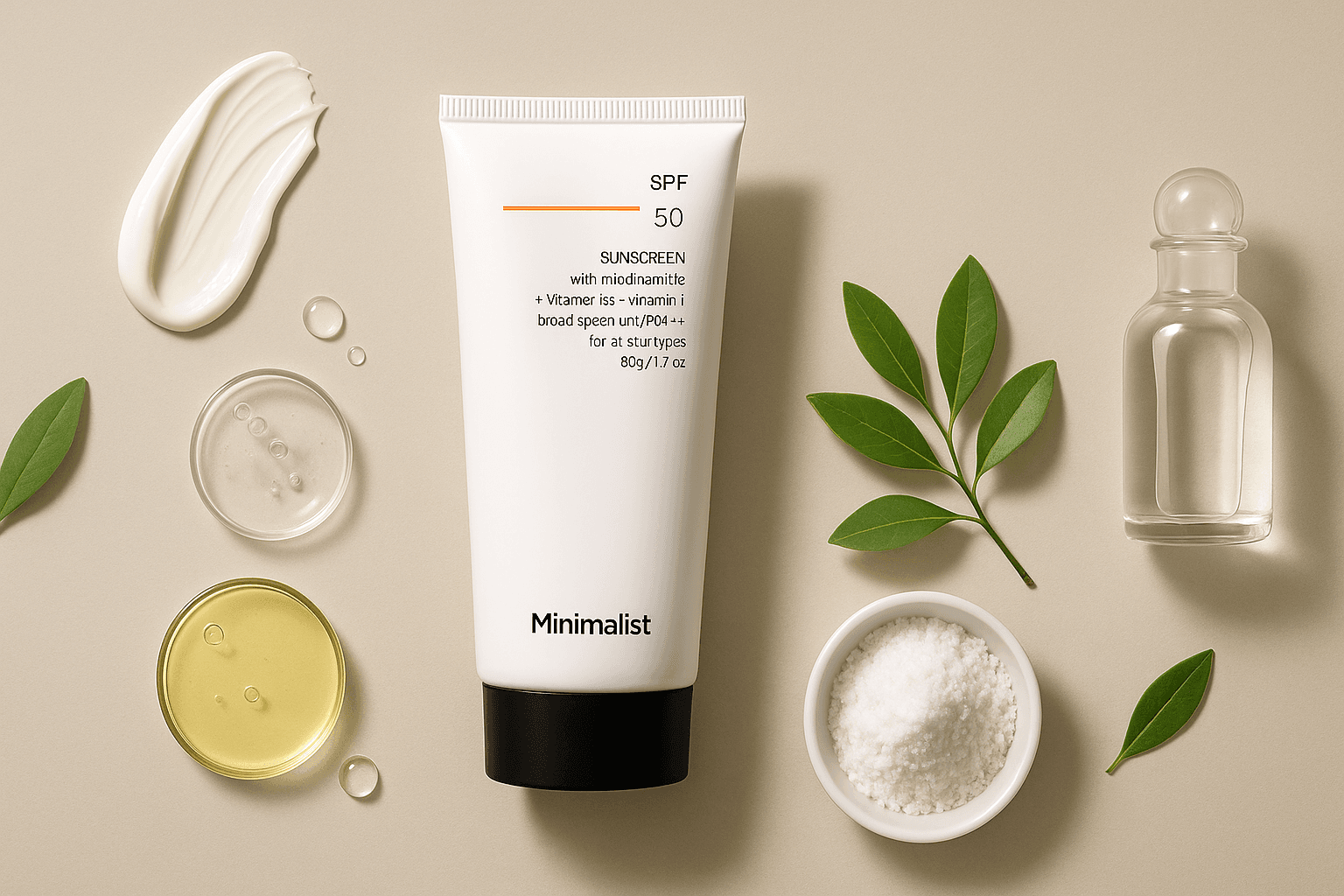
Short answer: yes, AI-generated images are allowed on Amazon listings as of Amazon's 2026 policy update, with limits. The product in the image must be your real product, not a fabrication. Background generation, lighting correction, and lifestyle scene generation around a real product are all explicitly permitted. Disclosure may be required for substantially AI-generated lifestyle content. The strictest rules apply to slot 1 (the main hero image): pure white background, 85% product fill, real photographic representation only.
Every Amazon seller I talk to is asking the same question: can I use AI-generated images on my listings without getting suppressed or flagged? The details are where the confusion lives.
Amazon's guidance, clarified across 2025 and 2026, treats AI image use as a spectrum, not a yes/no. Most everyday AI image work is fine. A specific subset is prohibited. A larger middle band requires judgment, and that's where sellers get tripped up.
What Amazon allows
Amazon explicitly permits AI-assisted edits across the full image stack. The clearly fine uses include:
- Background removal and replacement (the "pure white" version of a hero shot)
- Lighting and color correction
- Resolution upscaling
- Lifestyle scene generation for secondary slots, where the actual product is your real product
- Infographic overlays for dimensions, ingredients, included items, scale references
- Cleanup of minor artifacts in real product photos
If you're starting from a real photo of your real product and using AI to make it cleaner, sharper, and properly framed, you're squarely within policy. This is the everyday workflow Amazon has signaled is acceptable.
What Amazon doesn't allow
The line gets crossed when AI starts misrepresenting the product itself. The prohibited uses, in roughly increasing severity:
Main images that fabricate the product. The hero image, the one shoppers see in search results, must be a true photographic representation of what's actually shipping. AI-illustrated mockups, hand-drawn renders, or fully synthetic product imagery in slot one will get the listing suppressed.
Misrepresenting color, size, materials, or features. If the real product is matte and the AI render shows it glossy, that's a violation. Same for a different colorway, different material finish, or details the actual product doesn't have.
Showing accessories that aren't included. If the listing is for a single bottle but the lifestyle shot shows it with a free dropper, applicator, or gift box that doesn't actually ship, that's misleading content.
Hiding defects. AI cleanup that erases label damage, scratches, or variant differences. Amazon's explicit goal is preventing buyer surprise; using AI to mask the gap between marketing and reality is exactly what the policy targets.
In every case, the product in the listing must match the product in the box.
The grey area: when does AI use require disclosure?
This is where most sellers get stuck, and honestly, where Amazon's policy is still settling.
The framework distinguishes between AI-assisted (no disclosure needed) and AI-generated (disclosure may be needed) content. The line between them is described as "substantial modification", which is exactly as fuzzy in practice as it sounds. A few rules of thumb help interpret it:
- Background swaps on a real product photo are generally treated as AI-assisted. You're modifying the scene, not the product.
- Pure AI-generated lifestyle scenes, where the product is composited into a fully synthetic environment, sit closer to AI-generated. Disclosure is the safer call.
- AI-rendered product variants (different color, different finish, different angle generated rather than photographed) sit firmly in AI-generated territory if you're using them as primary representation.
Amazon's KDP (Kindle Direct Publishing) policy is more developed than the Seller Central image policy and gives a useful read on how Amazon thinks about this: AI-generated content requires disclosure, AI-assisted does not. The product image policy will likely converge on the same framing over time.
If you're not sure where a specific image falls, the safe move is to disclose. Amazon's current language allows you to add a note in the product description for substantially AI-generated imagery, something like "Lifestyle imagery on this listing was created with the assistance of AI to demonstrate product use." It's never hurt a listing to be transparent. It's hurt a lot of listings to be evasive and get caught later.
The other piece is record-keeping. Note which images on which listing used AI tools, what kind of work, and when. If Amazon ever asks, a workflow log turns the conversation into a one-email exchange instead of a suspension review.
The EU AI Act layer
For sellers shipping into Amazon's European marketplaces, there's a second policy converging on this: the EU AI Act, whose Article 50 transparency rules have applied since August 2, 2026. The relevant provision requires transparency disclosures on AI-generated content, in forms readable by both humans and machines.
Practically: if you sell into Germany, France, Italy, Spain, or the Netherlands, plan for an additional disclosure layer beyond Amazon's own policy. The simplest path is the same as the safe-call advice above: disclose substantial AI generation, keep records, build it into your workflow rather than retrofitting it later.
Smaller sellers have lighter obligations under the Act, but "we're small" doesn't exempt you entirely. National regulators (Germany's Federal Network Agency, for example) are the enforcement layer, and they're geared up.
A safe workflow
Putting the policy into a routine looks something like this:
1. Always start from a real product photo. Don't generate the product itself from scratch. Your phone camera is fine. The source photo just needs to actually exist.
2. Use AI for the work AI is good at. Clean backgrounds, correct lighting, scale to spec (1,000 px minimum for zoom, 1,600 px or more for the best zoom), generate variant lifestyle scenes for secondary slots, build out infographics.
3. Keep your hero image strict. Pure white at RGB 255, 255, 255. Product fills 85% of the frame. No props that aren't part of the sale. No text overlays. Real photographic representation. This slot has the strictest rules and the highest stakes. It's what shoppers see in search.
4. Disclose when in doubt. If a lifestyle shot is substantially AI-generated, say so in the product description. The cost of disclosure is zero. The cost of getting caught hiding it is suspension.
5. Keep workflow records. A simple spreadsheet (listing ASIN, image slot, AI tool used, date, type of modification) covers both Amazon and EU AI Act compliance. Five minutes of admin per launch.
6. Audit existing listings. If you've shipped AI-generated content without disclosure, backfill is the clean move. Edit the product description, add the disclosure note, save. Republishing isn't required.
Where BrandShots fits
I'll keep this short. The longer version is on the BrandShots for Amazon sellers page.
BrandShots is built around the safe path. Real product photo as the source of truth. Background and scene work that sits in the AI-assisted bucket for most use cases. Hero images at spec, secondary images at the right aspect ratios, infographic generation at the right sizes for A+ Content modules. The model keeps your label, colors and shape intact. We clean, light, and stage rather than fabricate.
BrandShots is deliberately not built to generate products from concepts. If you don't have a physical sample yet, BrandShots is the wrong tool. Shoot a phone photo first, then come back.
A caveat
I'm a founder, not a lawyer. The above is informational and reflects my reading of Amazon's published guidance and the EU AI Act as of mid-2026. Policy interpretation evolves, and your specific situation may have wrinkles this post doesn't cover. The actual source of truth is Amazon's Seller Central documentation. Check it before any major launch.
If you have a specific situation you're not sure about, Amazon's seller forums are a useful sanity check. Other sellers have usually run into the same edge case before you have.